
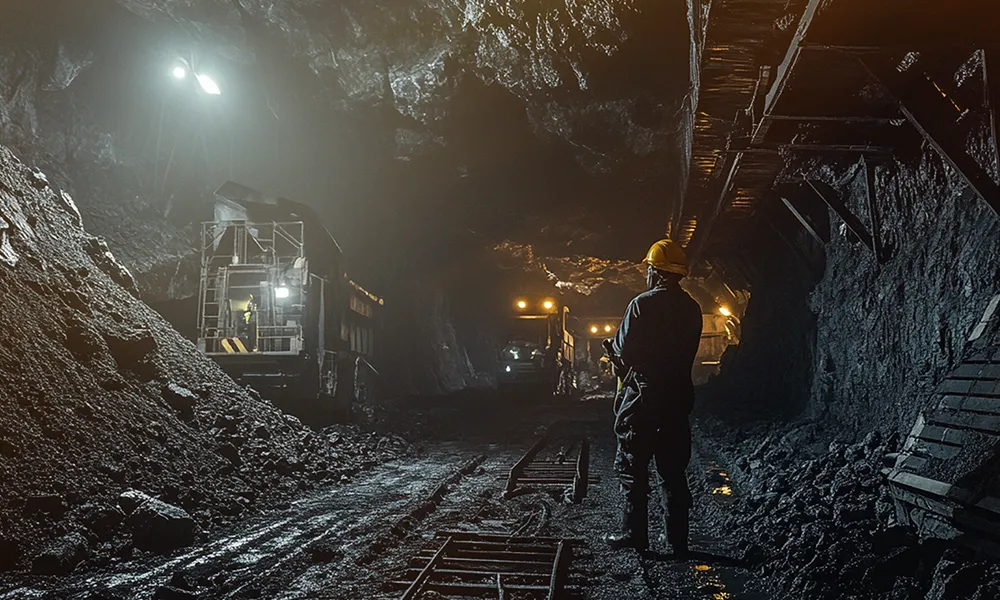
When a blast is fired underground, the goal is simple:
maximum energy into the rock, minimum energy into the air.
Without tampings, much of the explosive gas would escape straight out of the hole. This leads to:
- Poor fragmentation and oversized rock
- Dangerous flyrock in haulages and stopes
- High airblast and noise
- Wasted explosive energy and higher operating costs
Tampings solve this problem by creating a tight, resistant plug above the charge. The stemming column forces the gases to work harder on the surrounding rock mass, giving better breakage and a more controlled blast.
How Do Tampings Work in the Blast Hole?
A typical underground blast hole has three main sections:
- Explosive column at the bottom
- Tampings / stemming column above the charge
- Free collar at the top (depending on the design)
When the charge detonates:
- Explosive gases expand rapidly
- The tamping column resists this expansion at the top of the hole
- The path of least resistance becomes the rock around the hole, not the open collar
- Energy is directed into the rock, producing controlled fractures and fragmentation
If the tamping column is poor, too short or full of voids, energy vents up the hole instead of into the rock – which is exactly what mines want to avoid.
What Are Tampings Made Of?
Across the mining industry, tampings are commonly made from:
- Crushed rock or gravel
- Sand
- Clay-based materials
- Specially engineered blends
At OGM Mining Supplies, tampings are manufactured from:
- Crushed and screened metallurgical-grade dolomite (graded sinter):
Hard, angular chips that wedge tightly in the blast hole and create a strong mechanical lock. - Ecca bentonite clay:
A natural clay that acts as a sealant and carrier, filling voids between the dolomite chips, binding them together and improving gas-tightness.
This combination gives mines a free-flowing material that compacts into a dense, reliable plug once placed and tamped.
Low-Silica Tampings: Supporting Health & Safety
Modern underground mines place increasing emphasis on controlling respirable crystalline silica, which is linked to serious lung diseases when inhaled over time.
OGM’s tamping products are designed with this in mind. Using recommendations and analytical backing from specialist laboratories, the OGM formulation:
- Uses dolomite-rich graded sinter instead of silica-rich aggregates
- Keeps total crystalline silica content below 5% by mass in the final blend
- Helps mines reduce potential silica exposure associated with stemming dust
For safety teams and occupational hygienists, low-silica tampings are an important part of a broader dust-control strategy that also includes ventilation, water sprays and correct drilling practices.
Key Benefits of Quality Tampings
Using a well-designed tamping product in every blast hole offers several advantages:
- Better fragmentation – rock breaks to more manageable sizes, which improves loading and hauling efficiency.
- Reduced flyrock and airblast – protecting miners, equipment and underground infrastructure.
- Improved collar retention – less risk of blowouts and damaged ground around the hole.
- More predictable blasts – consistent stemming behaviour leads to more repeatable blast results.
- Improved cost control – explosive energy is used efficiently, reducing waste and minimising rework.
For underground mines under constant pressure to control cost per tonne, good tampings are a relatively small input with a very big impact.
How to Choose the Right Tamping Product
Choosing a tamping material is not just a box-ticking exercise. Mines should consider:
- Hole diameter and depth
Larger holes usually need coarser chips; smaller holes need finer material to pack tightly. - Rock type and ground conditions
Hard rock, jointed ground and highly stressed areas may need more robust stemming designs. - Explosive type
ANFO, emulsions and water-gel explosives each have different gas volumes and energy characteristics. - Health and safety standards
Dust control, silica limits and safe handling all point towards low-silica, inert products. - Practical handling underground
How easily the product can be transported, bagged, poured and tamped at the face.
OGM Mining Supplies assists clients in matching OGM Caps, Kgwahla or a custom blend to their specific blast design and geology.
OGM Tampings vs Generic Stemming Materials
Generic sand or gravel can be used as stemming, but they often come with trade-offs:
- Inconsistent grading and particle size
- Higher and uncontrolled silica content
- Variable performance from blast to blast
In contrast, OGM’s tampings are:
- Manufactured to a controlled recipe using graded sinter dolomite and bentonite
- Analytically verified for mineral composition and silica levels
- Locally produced in Vereeniging for dependable quality and supply
The result is a purpose-designed underground stemming product, not just a conv