
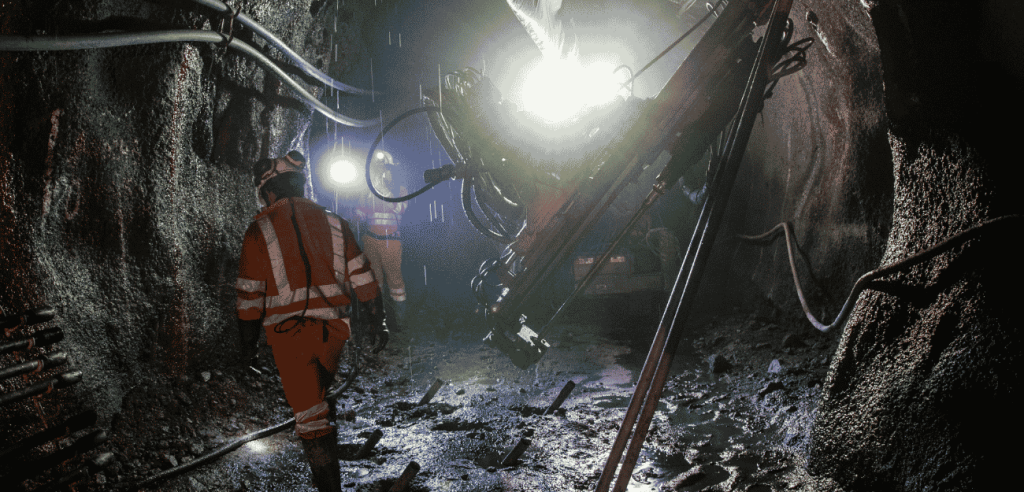
How do tampings improve blast performance? In South African mining, tampings help support better blast control by improving the confinement of explosive energy inside the shot hole.
Although tampings may appear to be a small blasting consumable, their effect can be significant. When the right tamping or stemming product is selected, sized correctly, and used consistently, it can help improve fragmentation, reduce energy loss, and support more predictable blasting outcomes.
For readers who need a basic terminology guide first, OGM Supplies has already explained the difference between tamping and stemming in mining. This article focuses specifically on blast performance and why tamping quality matters in practical mining operations.

Why Blast Performance Depends on Controlled Energy
A blast works best when explosive energy acts on the rock mass as intended. However, if energy escapes too quickly through the collar of the hole, the blast may lose efficiency.
Tampings and stemming products help contain explosive gases inside the shot hole for longer. As a result, more energy can act on the surrounding rock instead of venting upward too early.
In addition, better confinement can support more consistent breakage. This matters because poor fragmentation can affect loading, hauling, crushing, and downstream production.
Therefore, tamping performance should not be treated as a minor detail. It forms part of the broader blasting system.
How Tampings Improve Blast Performance in Mining
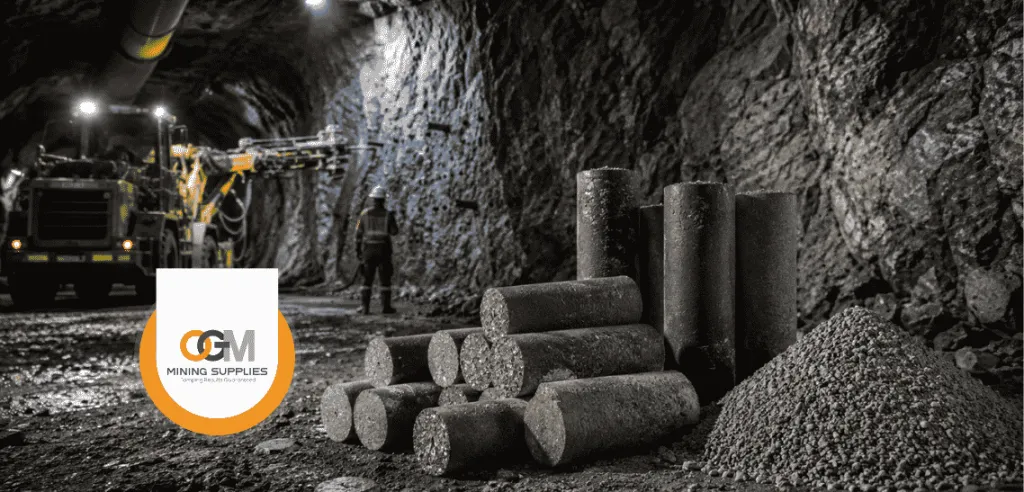
Tampings improve blast performance by helping to seal the charged hole after explosives have been placed. This helps control the release of explosive gases and supports the transfer of energy into the rock mass.
In practical terms, this can help improve fragmentation, reduce flyrock risk, support better muckpile conditions, and reduce avoidable production delays. However, the outcome still depends on the full blast design, explosive selection, drilling accuracy, stemming length, hole condition, and competent application.
In other words, tampings do not replace good blast planning. Instead, they help the blast design perform more consistently when used correctly.

Better Confinement of Explosive Energy
The main performance benefit of tamping is confinement. A correctly selected tamping or stemming product helps resist the early escape of gas from the shot hole.
When gas stays confined for longer, the explosive energy has more time to work against the rock. Consequently, the blast can achieve a more effective break.
In contrast, poor stemming can allow energy to vent too early. This can reduce blast efficiency and may contribute to inconsistent fragmentation.
For this reason, mines should consider tamping quality as part of blast performance control, not only as a consumable cost.
Improved Fragmentation Control
Fragmentation plays a major role in mining productivity. If rock breaks too large, the mine may need extra secondary breaking, slower loading, and more processing effort.
Good tamping practice can help support the blast design by keeping energy where it is needed. As a result, the mine has a better chance of achieving the required fragmentation profile.
Moreover, more consistent stemming products can help reduce variation between blasts. This gives blasting teams, production teams, and processing teams more predictable results.
However, tampings alone do not guarantee perfect fragmentation. They support the system, while drilling accuracy, burden, spacing, explosive loading, and rock conditions still influence the final result.
Reduced Energy Loss at the Collar
Energy loss at the collar can reduce the effectiveness of a blast. When stemming fails or performs poorly, gases may escape through the top of the hole instead of breaking the rock mass efficiently.
Tampings help reduce this loss by creating resistance in the stemming column. Therefore, they support a more controlled release of energy during detonation.
This is especially important where mines need consistent blast outcomes across repeated production cycles. If stemming performance changes from one hole or one batch to another, blast results may become harder to manage.
In addition, reducing energy loss can help improve the mine’s overall blasting discipline.
More Predictable Muckpile Conditions
A well-controlled blast can support better muckpile shape and diggability. This matters because loading equipment performs best when fragmented material is manageable and consistent.
When tampings help the blast energy work more efficiently, the resulting rock movement may become more predictable. Consequently, loading teams may experience fewer delays caused by oversize material or uneven breakage.
In contrast, poor stemming can contribute to inconsistent breakage. This may slow down loading, increase handling effort, and place pressure on production schedules.
Therefore, mines should assess tamping quality as part of the full cost of blast performance.

Support for Underground and Surface Mining Applications
Tamping and stemming performance matters in both underground and surface mining. However, each environment has different practical requirements.
Underground operations may place strong emphasis on safety, confined working areas, ventilation, and controlled blasting outcomes. Surface operations may focus more heavily on fragmentation, blast movement, flyrock control, and production efficiency.
In both cases, product consistency, correct sizing, and compliance matter. Mines should work with a supplier that understands the difference between operational environments and can support the correct tamping selection.
For safety-specific detail, OGM Supplies has also covered whether tampings are safe for underground mining.
Why Tamping Size and Fit Matter
Tamping size must match the shot hole requirements. If the tamping product does not fit correctly, it may not provide the resistance needed to support effective confinement.
For example, a product that is too small may not seal the hole effectively. In contrast, a product that is unsuitable for the hole may cause handling or placement issues.
In addition, hole depth and diameter influence the required tamping or stemming approach. This is why custom sizing can become important for mines with specific drilling patterns or blasting requirements.
A specialist supplier should therefore understand shot hole dimensions, application conditions, and product suitability before recommending a tamping solution.
Why Batch Consistency Affects Blast Results
Batch-to-batch consistency matters because blasting teams rely on repeatable inputs. If tamping products vary in size, shape, material quality, or handling behaviour, the mine may see inconsistent performance.
Consistent tamping products support more predictable placement and use. In addition, they help procurement teams maintain better control over product quality.
This is also important for audits and supplier evaluations. Mines need confidence that every delivery matches the approved product specification.
Therefore, tamping quality should be assessed before the product reaches the blasting area.
Compliance and Product Quality
South African mines operate in a regulated environment. As a result, tamping and stemming products should align with relevant requirements, including SANS 120:2009 where applicable.
Working with a SANS 120:2009-compliant tamping supplier helps procurement and blasting teams reduce uncertainty around product suitability. It also supports stronger documentation when mines review supplier performance.
In addition, compliance helps reduce risk during audits, internal reviews, and safety assessments. However, mines should still request the correct documentation and confirm that the product supplied matches the product approved.
Good blast performance starts with reliable inputs, and compliant stemming products form part of that input control.
Tamping Performance and Risk Assessment
Blast performance should not sit separately from risk management. In South Africa, GG41904 and the explosives regulations place emphasis on risk-based controls around explosives-related activities.
Section 4.14(2) and 4.14(3) requirements highlight the importance of risk assessment involving the relevant parties, including the explosive supplier, stemming supplier, and blasting person where required. Therefore, the stemming product should be considered in the broader blasting risk assessment.
A specialist supplier can support this process by providing product information, compliance documents, and supplier-side input. This helps the mine connect performance, safety, and documentation.
For an overview of the local manufacturing landscape, see OGM Supplies’ guide on who manufactures tampings in South Africa.
Total Production Value of Better Blast Performance
Procurement teams often compare tamping products by unit price. However, the real value lies in total production performance.
Poor fragmentation can lead to additional breaking, slower loading, higher crusher pressure, and increased downtime. In addition, inconsistent blast results can affect planning across the mining cycle.
By contrast, reliable tampings help support better energy control and more predictable blast outcomes. As a result, the mine can reduce avoidable disruption and protect production flow.
Therefore, a slightly cheaper product may not offer better value if it increases operational uncertainty.
Common Tamping Problems That Affect Blast Performance
Mines should watch for several warning signs. These include inconsistent dimensions, poor fit in the shot hole, unclear material origin, weak product documentation, and irregular stock quality.
In addition, poor supplier communication can create performance risk. If the supplier cannot explain product suitability, sizing options, compliance status, or batch control, the mine may struggle to manage quality.
Another concern is unconfirmed product compliance. Without clear evidence, procurement teams may expose the mine to audit and liability risk.
Consequently, blasting teams and procurement teams should evaluate tamping products before problems appear in production.
How OGM Supplies Supports Better Blast Performance
OGM Supplies specialises in tamping and stemming products for South African mines. This focus allows the company to support mines with product consistency, correct sizing, compliance documentation, and reliable local supply.
In addition, OGM Supplies understands that tampings are not simply consumables. They form part of the mine’s blasting performance, safety, and procurement control system.
For mines that require consistent tamping supply, OGM Supplies can assist with product selection, sizing discussions, lead time planning, and documentation support. This helps procurement officers, blasting officers, and mine managers make stronger supplier decisions.
To discuss tamping requirements for your mining operation, contact OGM Supplies for specialist support with tamping and stemming products in South Africa.
FAQs
How do tampings improve blast performance?
Tampings help improve blast performance by supporting confinement of explosive gases inside the shot hole. This helps more energy act on the rock mass instead of escaping too early through the collar.
Can tampings improve fragmentation?
Yes, tampings can help support better fragmentation when they form part of a correctly designed blast. They do not replace good drilling, charging, and blast planning, but they help the blast design work more consistently.
Why does tamping size matter in blasting?
Tamping size matters because the product must suit the shot hole diameter and application. If the fit is poor, the stemming column may not provide the required resistance for effective energy confinement.
Do tampings affect production efficiency?
Tampings can affect production efficiency indirectly by supporting more predictable blasting outcomes. Better fragmentation can reduce oversize material, secondary breaking, loading delays, and downstream handling problems.
What should mines check before buying tampings?
Mines should check product size, batch consistency, SANS 120:2009 compliance support, documentation, supplier experience, and local stock availability. They should also confirm whether the supplier can assist with product information for risk assessment purposes.